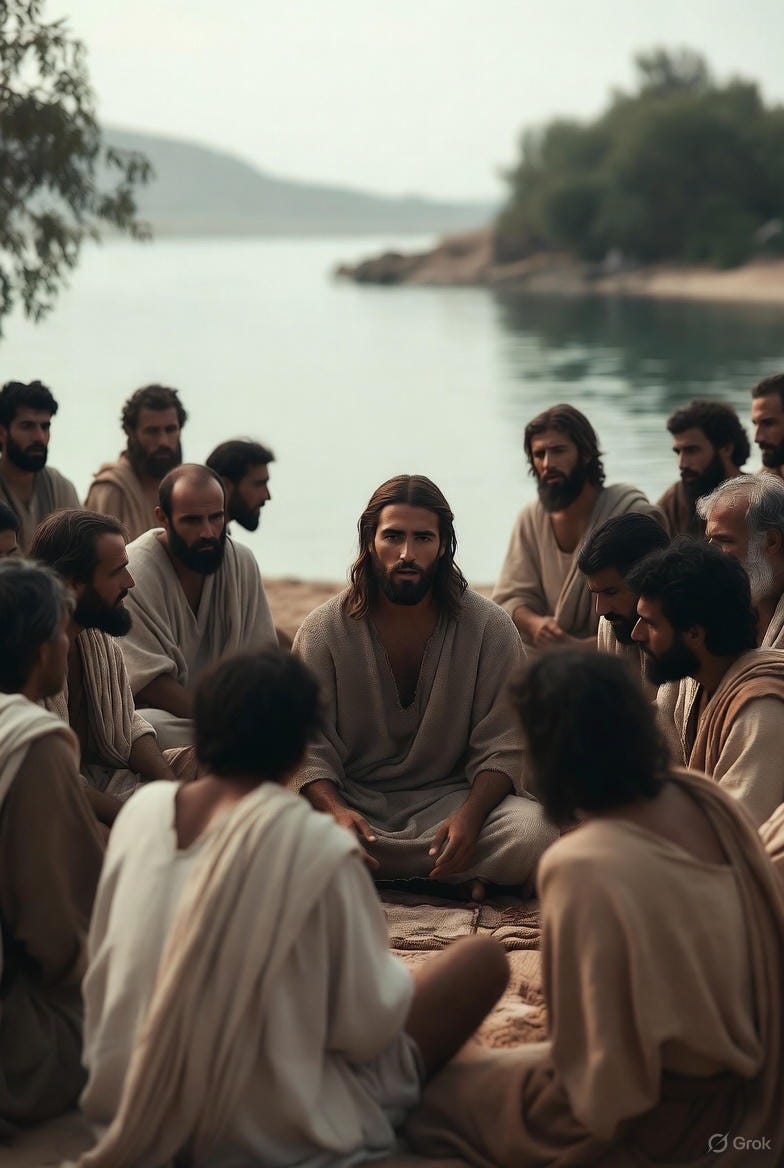
Peter and Paul: Two Men, Two Paths, One Christ

Jesus formed two foundational pillars of the Church - Peter and Paul - through radically different encounters. Their stories show that God calls every man differently, but always with purpose, mercy, and mission.
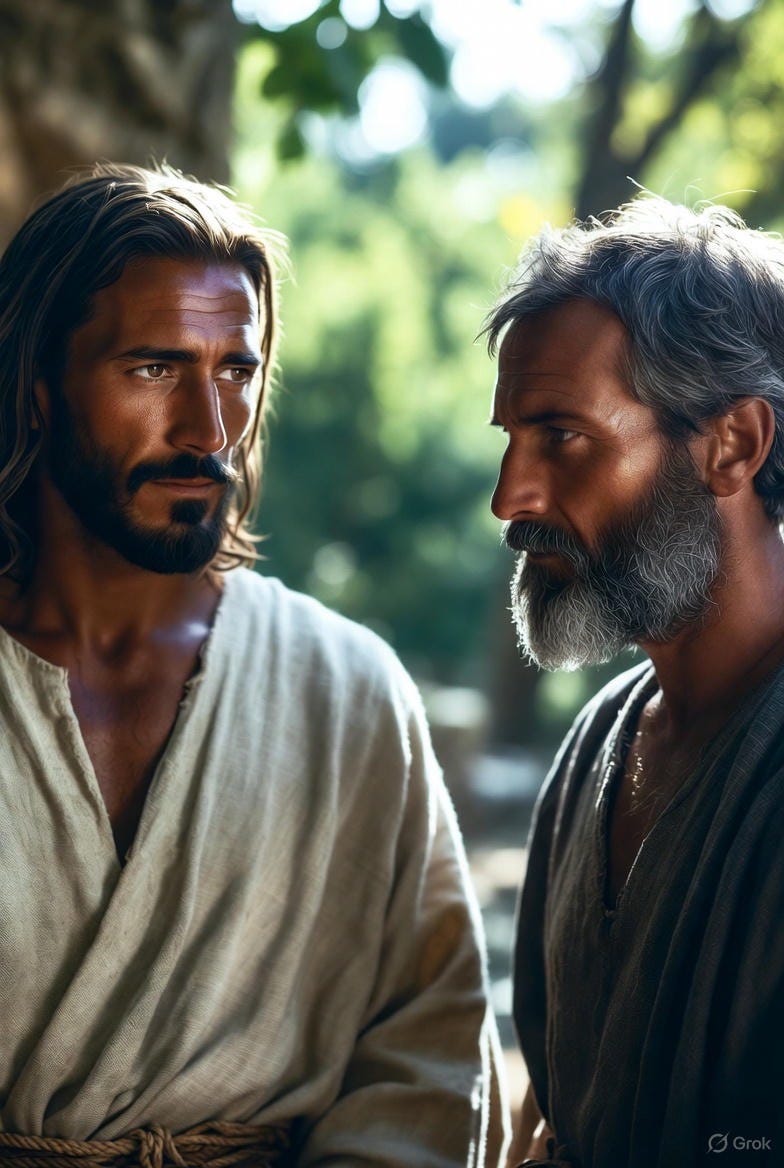
Peter: The Man Formed Slowly, Personally, Face-to-Face
Peter’s relationship with Jesus unfolds like a three-year apprenticeship of love, correction, and intimate friendship.
Peter is the man shaped gradually.
He doesn’t convert in a single dramatic moment.
He grows into faith the way a fisherman grows into mastery:
• Called from his boat (Luke 5)
• Walks on water and sinks (Matt 14)
• Confesses Christ (Matt 16)
• Gets rebuked—“Get behind me, Satan!” (Matt 16:23)
• Tries to stop the Passion
• Denies Jesus
• Weeps bitterly
• Is restored at the Sea of Galilee (John 21)
• Becomes the shepherd of the flock
Peter’s story shows a man learning through failure, returning through forgiveness, and growing through presence.
Jesus looked Peter in the eyes.
He spoke directly to Peter 1-on-1 more than any other apostle.
Peter’s sanctification is relational—a slow, tender, bruising, purifying love.
Peter represents every man who walks with Christ imperfectly.
The man who:
• Stumbles
• Tries hard
• Gets it wrong
• Gets up again
• And is remade by love
Peter’s conversion is a journey, not an event.

Paul: The Man Struck Down, Overpowered, and Reborn in an Instant
Paul’s story is the opposite.
Paul is the man changed suddenly—violently—even against his will.
He’s not searching for Jesus.
He’s hunting His followers.
Then:
• A light from heaven
• A voice
• A fall to the ground
• Blindness
• A forced humility
• Three days of darkness
• A prophetic commission

Paul doesn’t walk with Jesus in Galilee.
He meets the risen, glorified Christ on a road of blood and fury.
Paul represents every man whose life is shattered and rebuilt overnight.
The man who:
• Is moving in the wrong direction
• Is stopped by grace
• Is broken open
• And redirected with fire in his bones
Paul’s conversion is a moment, not a journey—followed by a lifetime of mission.
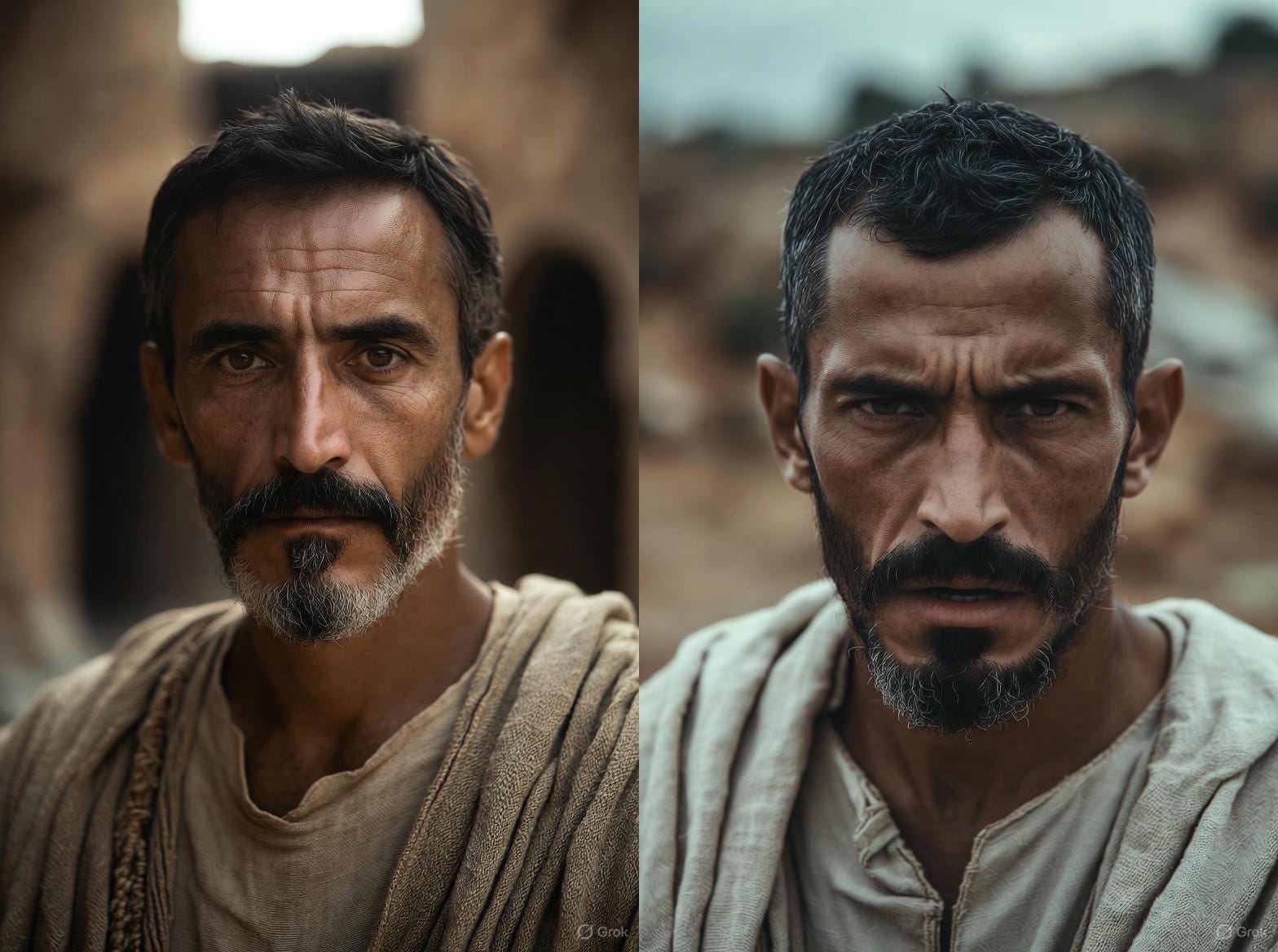
Peter the Shepherd vs. Paul the Missionary
Peter is the rock - steadying the Church.
Christ gives him:
• The keys
• The authority to bind and loose
• The role of shepherd
• The task of strengthening his brothers
Peter is father.
Paul is the sword - cutting paths into the pagan world.
Christ gives him:
• A commission to the Gentiles
• Power in preaching
• The mind to write doctrine
• The fire to suffer for the Gospel
Paul is warrior.
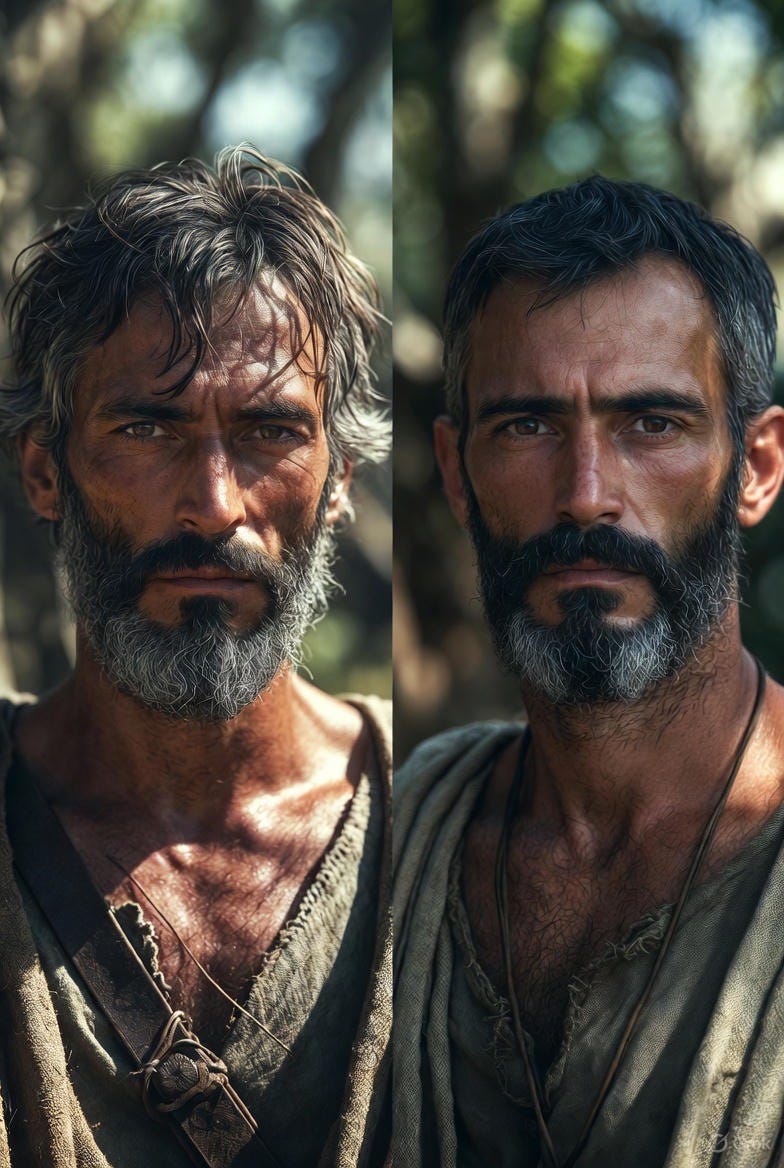
Peter Knows the Heart of Jesus; Paul Knows the Mind of Christ
Because of their encounters:
Peter’s writings emphasize love, humility, and suffering well.
He speaks like a man shaped by:
• forgiveness
• mercy
• leadership over a wounded flock
Paul’s letters emphasize doctrine, theology, and spiritual warfare.
He speaks like a man who:
• saw the glory
• understood the cosmic stakes
• and never wanted to be blind again
Peter carries the heartbeat of Christ.
Paul carries the intellect of Christ.
Both are essential.
One without the other is imbalance.
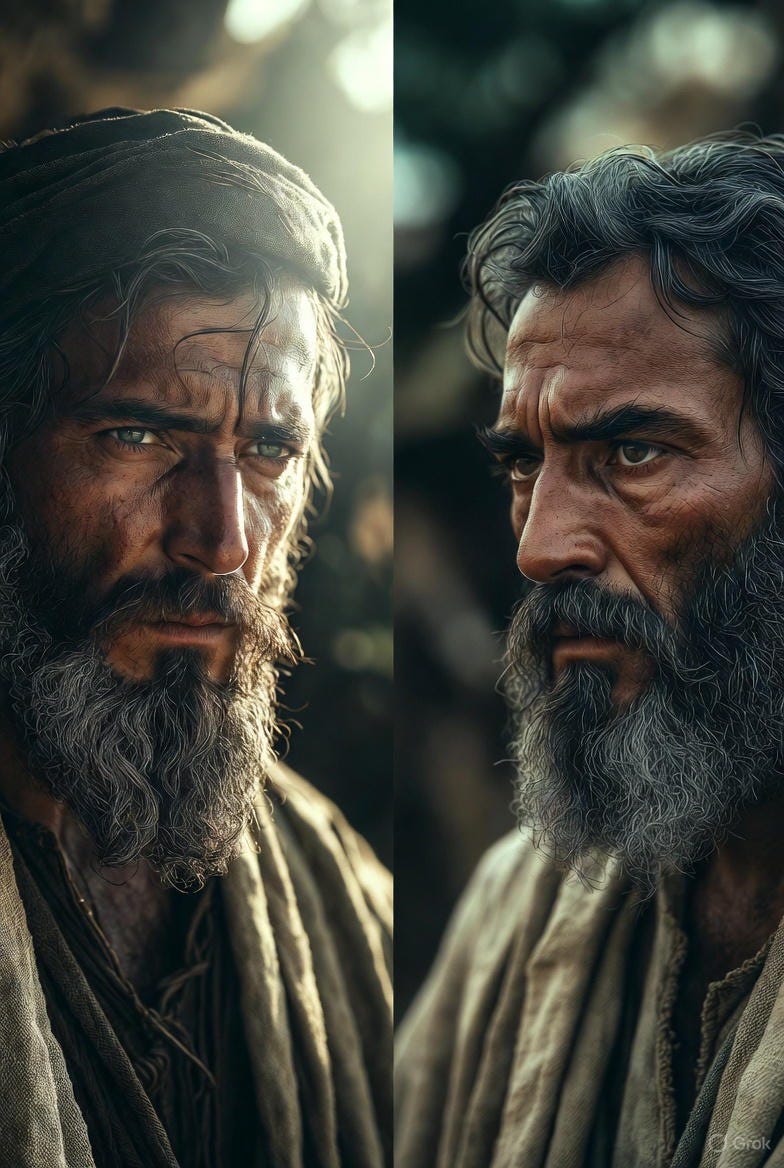
Peter Teaches Us That Grace Is Slow; Paul Teaches Us That Grace Is Violent
Peter’s grace is like the shore of Galilee:
Waves come in slowly, repeatedly, reshaping the sand.
Paul’s grace is like lightning on the Damascus Road:
Sudden. Blinding. Irresistible.
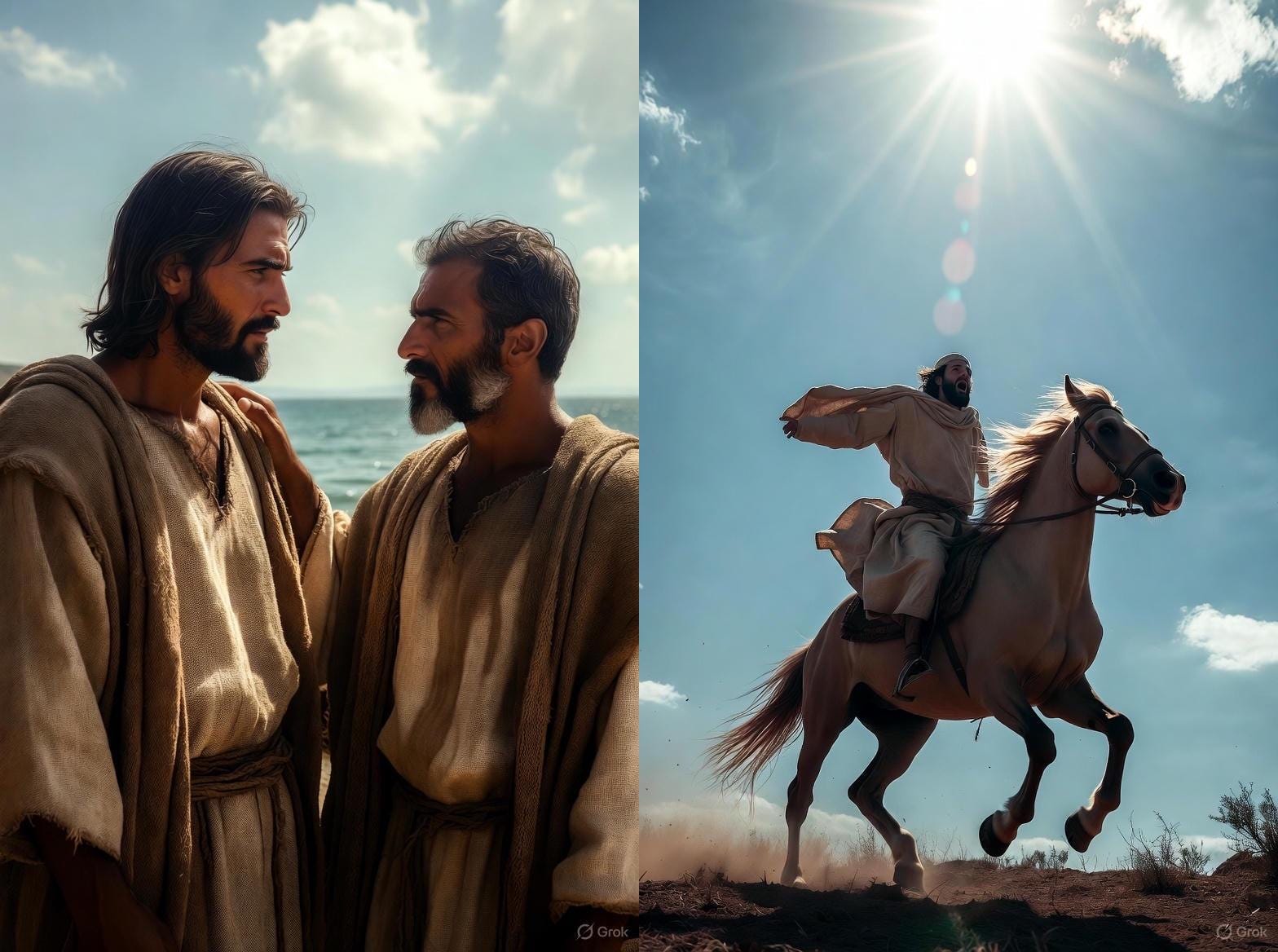
One Was Chosen First; One Was Chosen Last - Both Chosen Fully
Peter is chosen early:
“Follow me.”
Paul is chosen late:
“Why are you persecuting me?”
But both:
• abandoned everything
• suffered everything
• died for the same Christ
• and now stand as twin pillars of the Church
Together they show:
There is no one way a man must come to God.
Only that he must come.
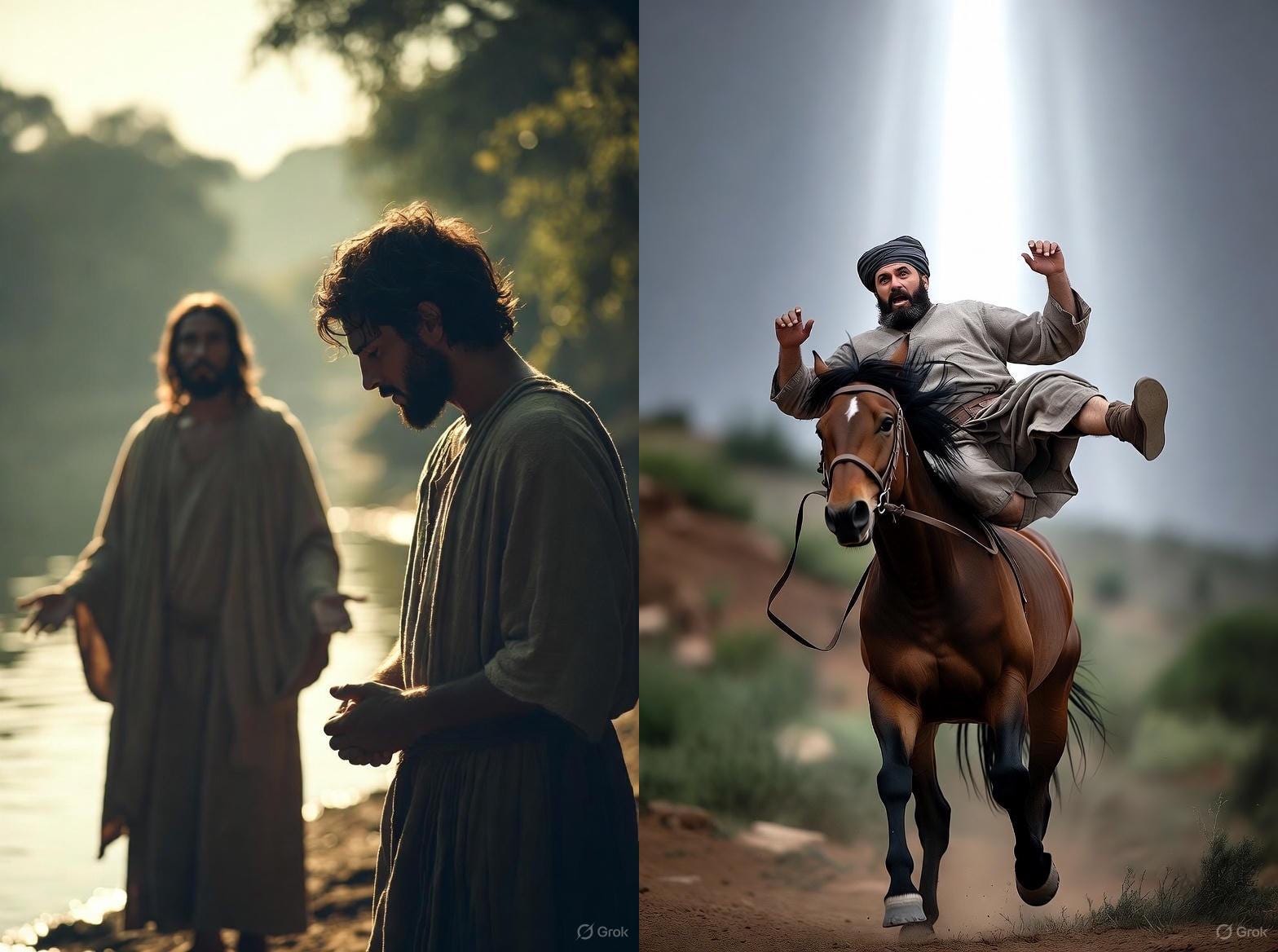
Conclusion: Two Ways Christ Makes Great Men
Peter is the saint for the man who grows over time.
Paul is the saint for the man who is stopped in his tracks.
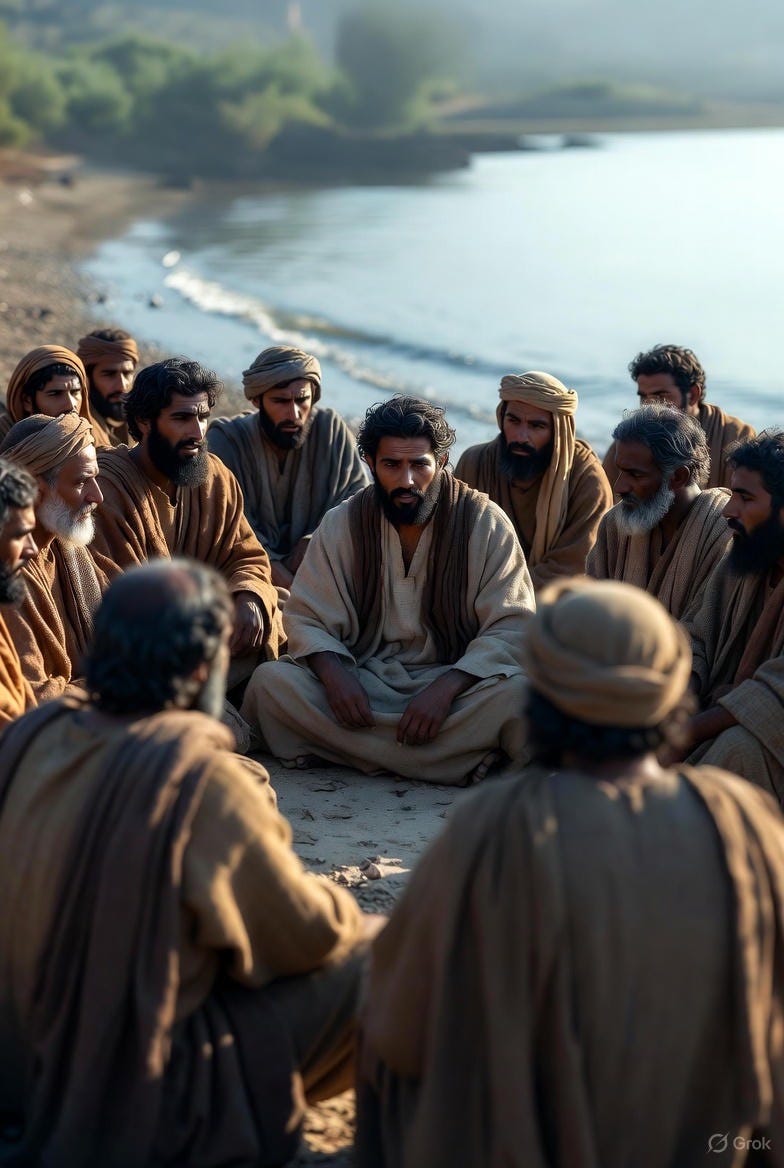
Peter is the saint for the struggler.
Paul is the saint for the zealot.
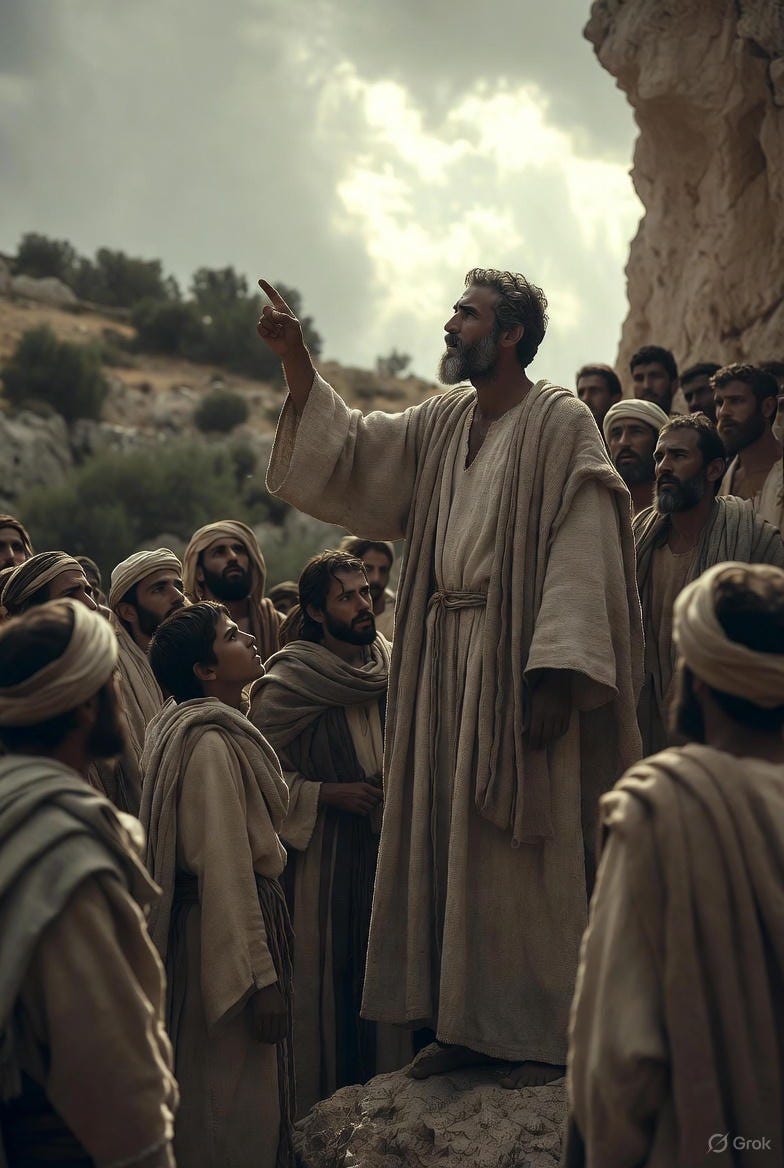
Peter shows that Christ walks with us in our weakness.
Paul shows that Christ breaks us in our pride.
And both reveal the same truth:
Jesus can remake any man — slowly or suddenly — into something magnificent for the Kingdom.