
The Trebuchet: Gravity’s Perfect Weapon
The Machine That Made Castles Mortal

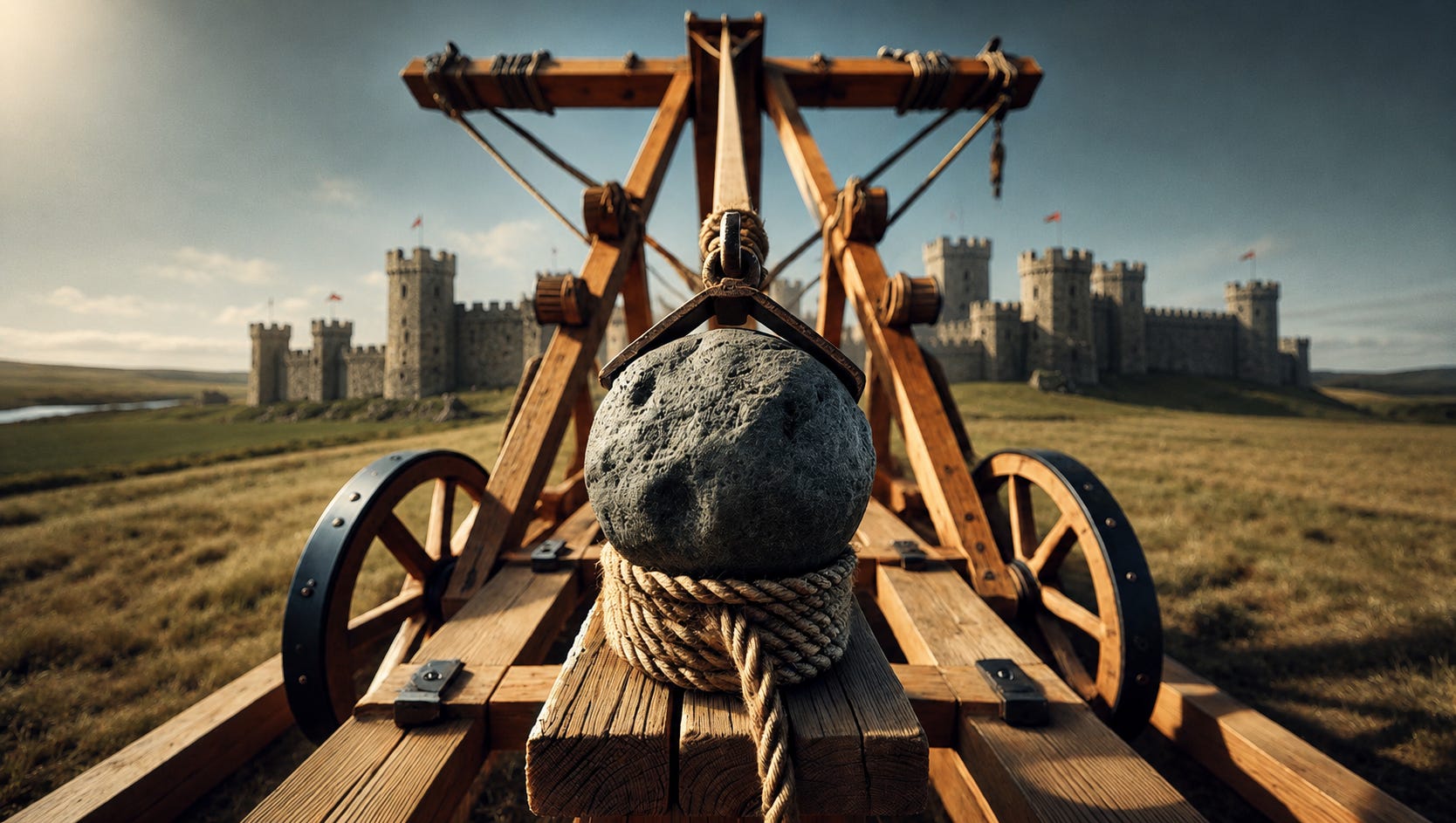
The trebuchet is one of the most elegant killing machines ever devised by the human mind — a weapon that married physics, engineering, and brute destructive power in a way that made castle walls feel mortal.
The Design
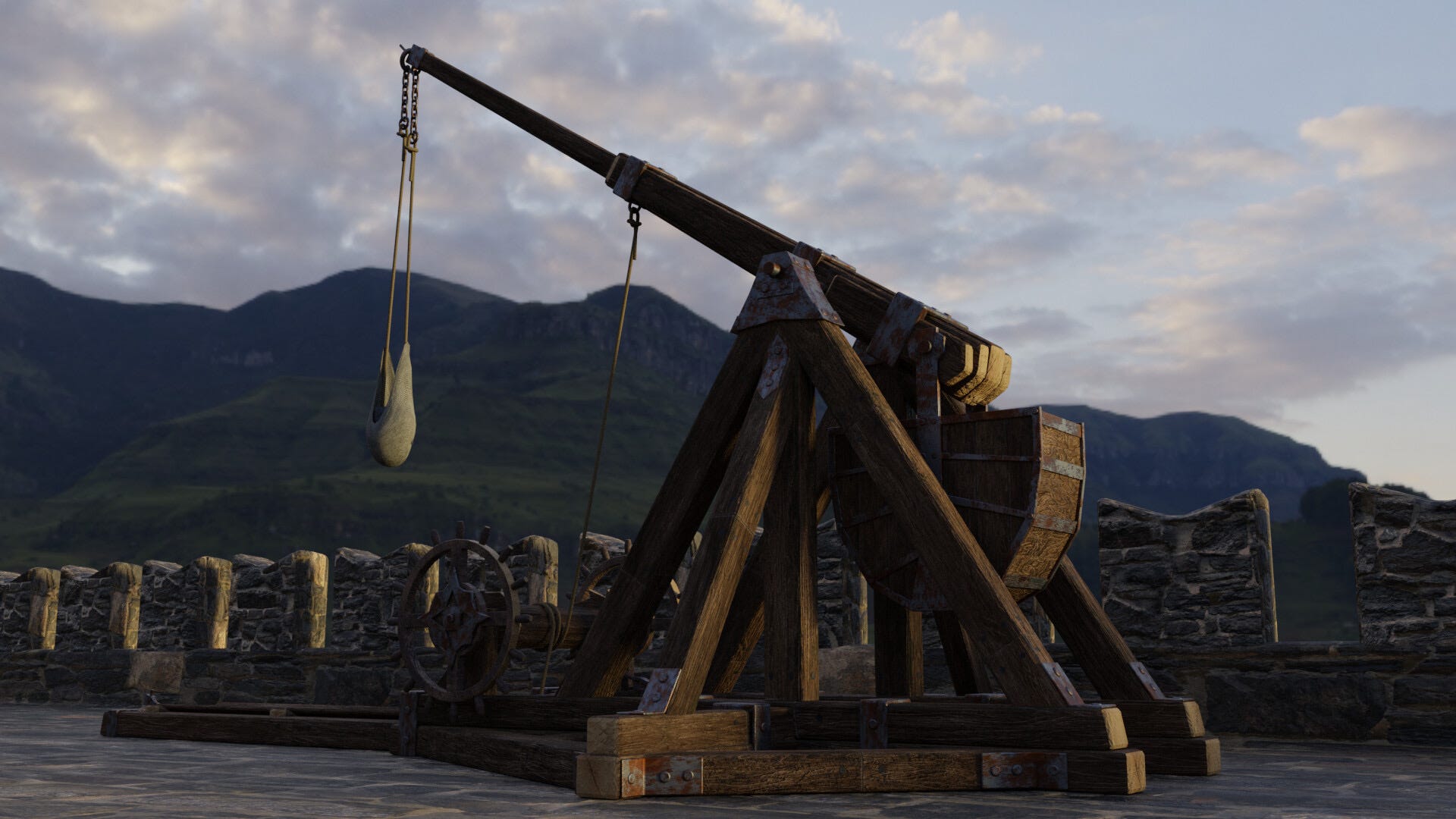
At its heart, the trebuchet is a lever. A long throwing arm is mounted on a tall frame and set on a pivot. On the short end hangs a massive counterweight — sometimes a fixed box filled with earth, stone, or lead, sometimes a swinging counterweight on a secondary pivot (the hinged or floating counterweight trebuchet, which was the more sophisticated evolution). The long end holds a sling. The operator winches the long arm down against the counterweight’s resistance, loads a projectile into the sling, and releases. Gravity does the rest. The counterweight plummets, the long arm swings in a tremendous arc, and the sling whips the projectile forward and upward before releasing it at precisely the right moment — the geometry of the sling’s release angle determining both range and trajectory.
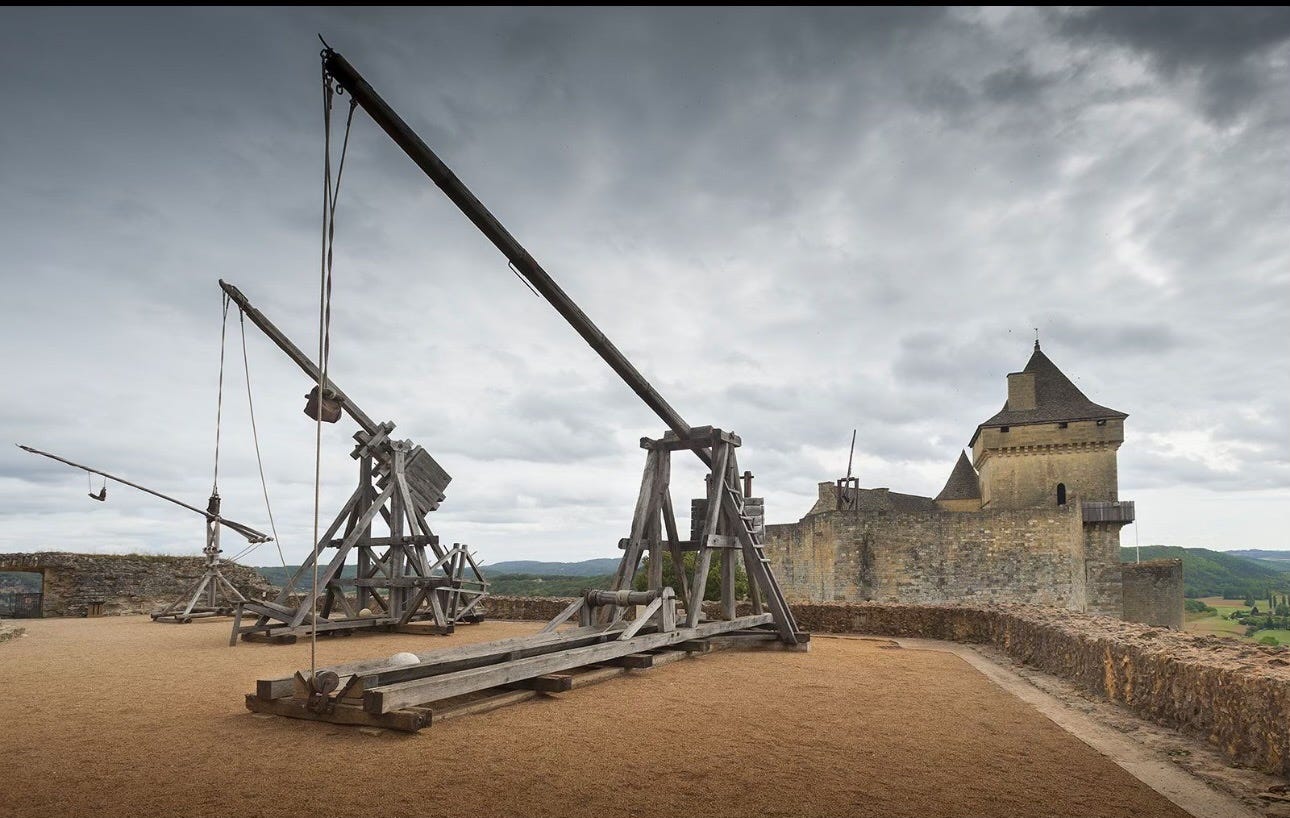
What made it superior to earlier torsion engines like the ballista or onager was that it didn’t rely on twisted rope or sinew that degraded in wet weather and fatigued over time. It ran on gravity — inexhaustible, consistent, and indifferent to the elements. A well-built trebuchet could hurl a 300-pound stone projectile 300 yards with remarkable repeatability. The largest machines — England’s Warwolf, built by Edward I for the siege of Stirling Castle in 1304 — were so immense that the Scottish garrison reportedly asked to surrender before it even fired. Edward refused. He’d spent too much effort building it not to see it loose at least once.
Its Formidability
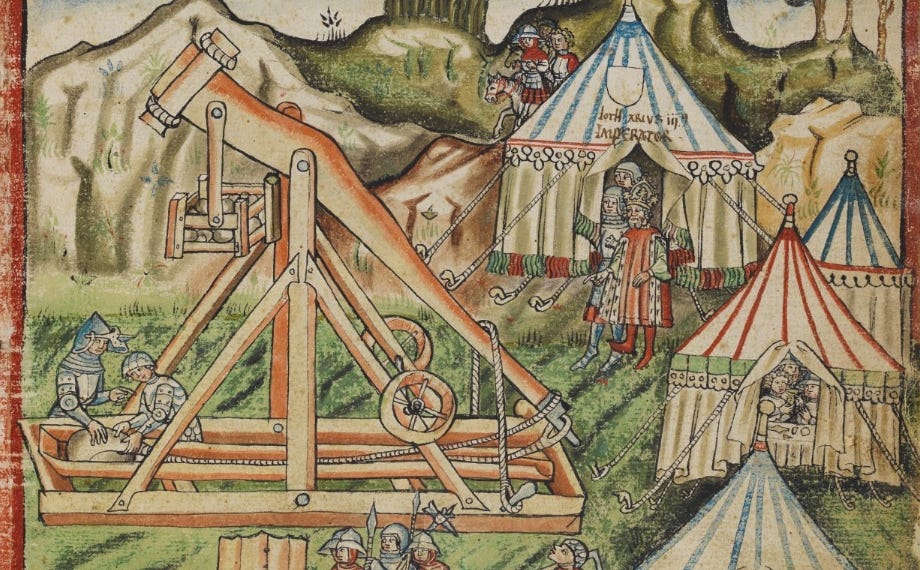
The trebuchet dominated siege warfare for roughly three centuries, from around the 11th through the 14th. Its genius lay not just in raw power but in sustained, accurate bombardment. Commanders could dial in range by adjusting the counterweight, sling length, or projectile weight. They could systematically target the same section of wall — hour after hour, day after day — until the masonry cracked and collapsed. No castle wall, however thick, was truly safe from a determined trebuchet battery given enough time.
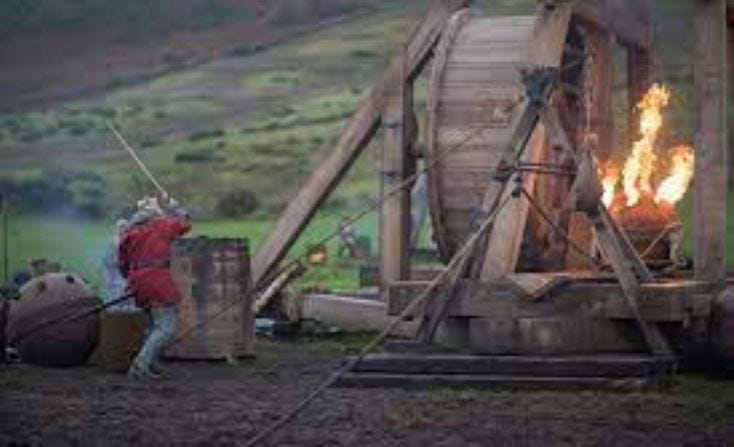
The psychological effect was profound. Medieval armies had no answer to a weapon raining death from hundreds of yards away. And the ammunition wasn’t always stone. Commanders lobbed rotting animal carcasses to spread disease, beehives to sow chaos, incendiary pots of burning pitch, and — in at least one documented case during the siege of Caffa in 1346 — bodies of plague victims over the walls in what may be history’s first recorded act of biological warfare.
Its Demise — the Canon
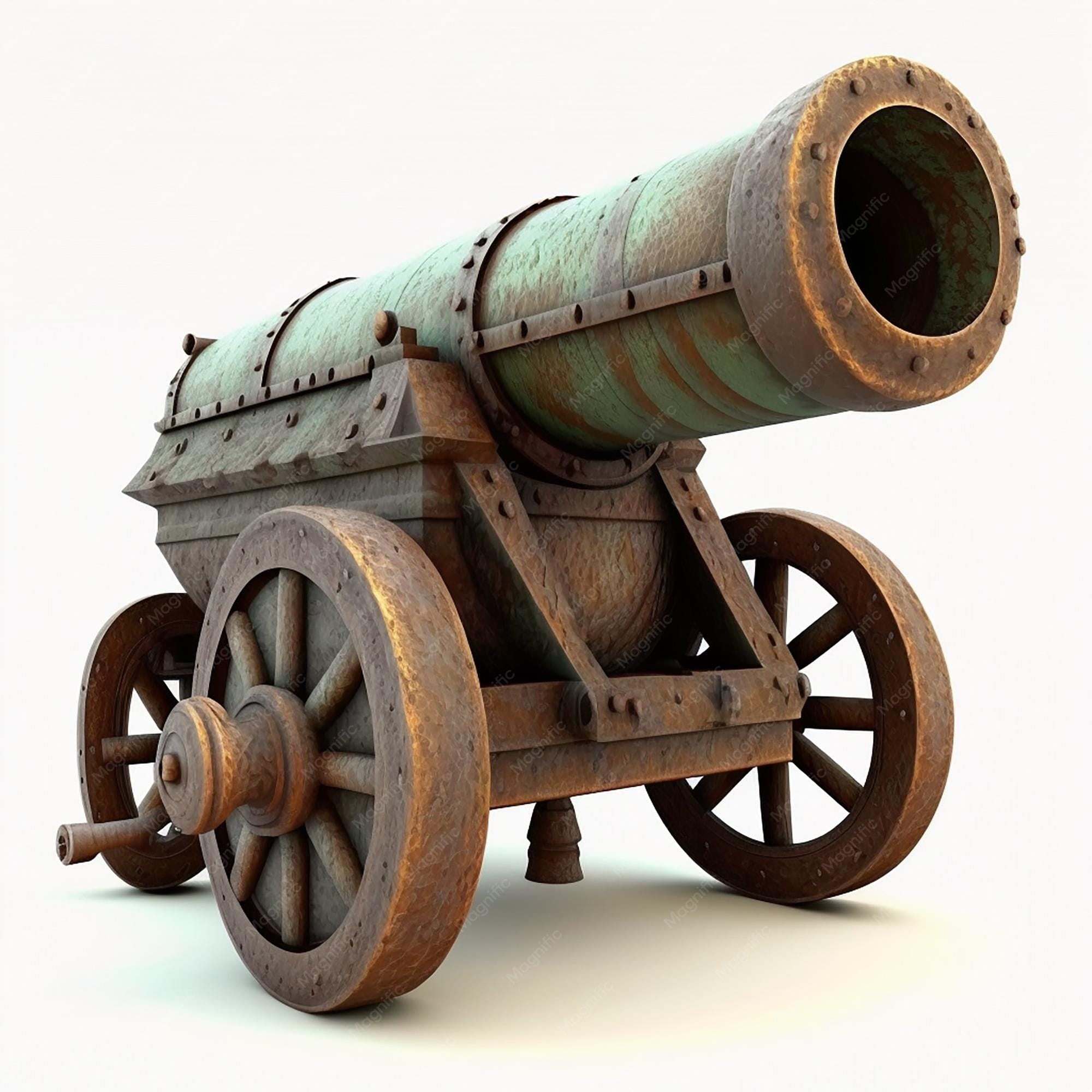
The trebuchet didn’t fall to a better machine. It fell to gunpowder.
The cannon — crude, deafening, and initially far less accurate than a well-operated trebuchet — arrived in European warfare in earnest in the early 14th century. The earliest cannons were frankly inferior siege weapons. They were slow to load, prone to exploding, and couldn’t match the trebuchet’s reliability or projectile weight. For a generation or two, the two technologies coexisted on siege lines.
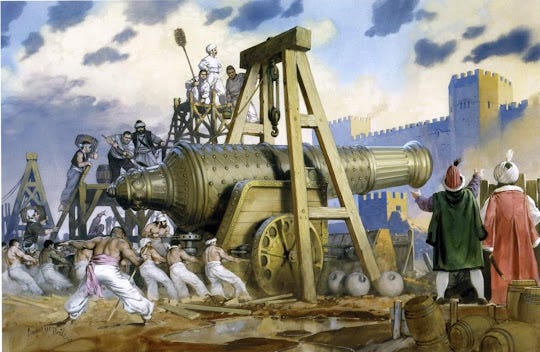
But the cannon had the one thing the trebuchet could not answer: it was getting better fast. By the mid-15th century, the arms race had produced iron and bronze cannons capable of firing iron balls with enough velocity to shatter stone rather than simply batter it. The trebuchet battered through mass and gravity; the cannonball shattered through velocity and concentrated impact. Stone walls that had withstood trebuchet bombardment for days collapsed under concentrated cannon fire in hours.
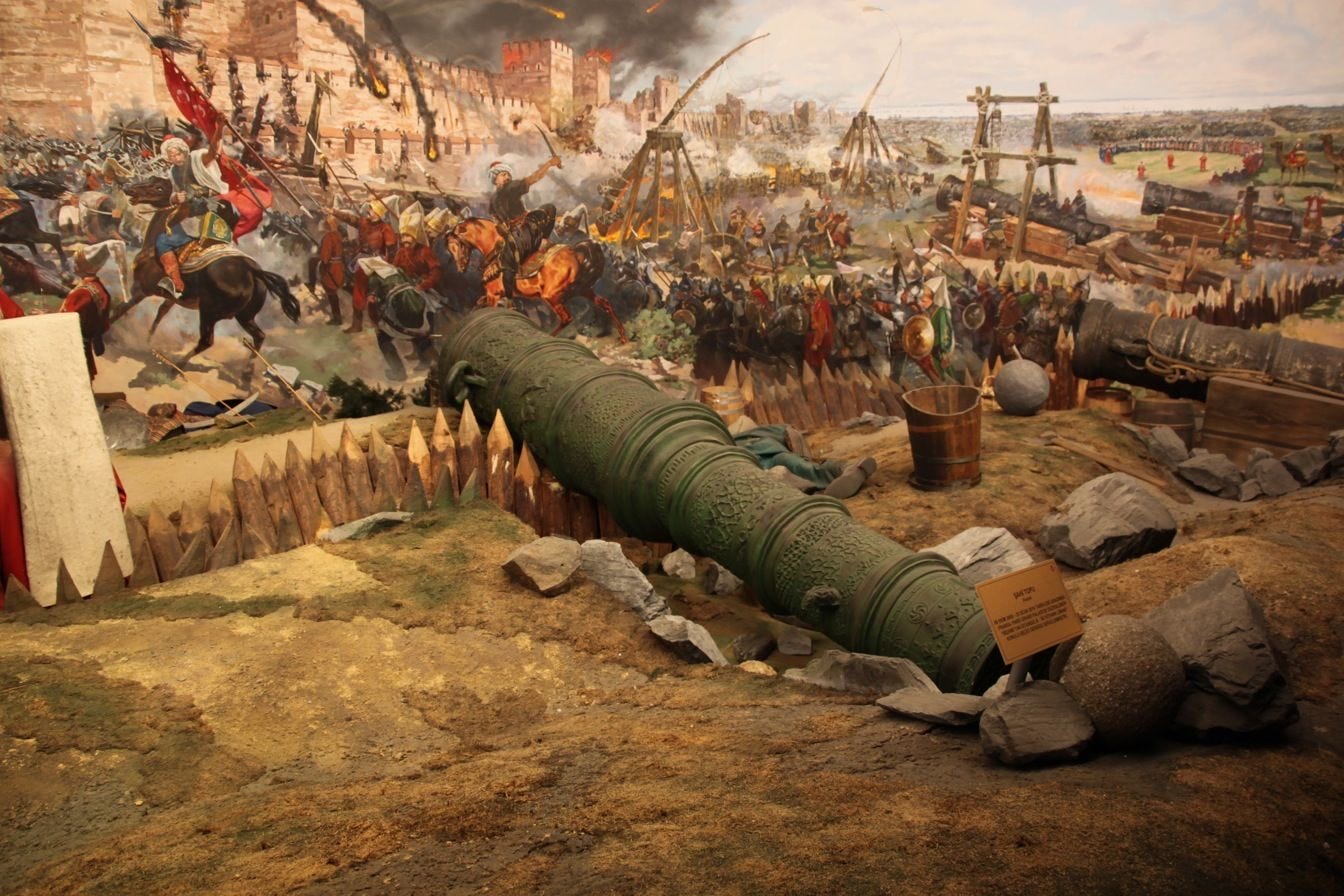
The symbolic death knell came in 1453 when the Ottoman Sultan Mehmed II deployed massive bronze cannons — including the famous Basilica cannon — against the walls of Constantinople, walls that had stood for a thousand years. They fell in weeks.
The trebuchet lingered in places that lacked gunpowder supply, but as a front-line siege weapon, it was finished.
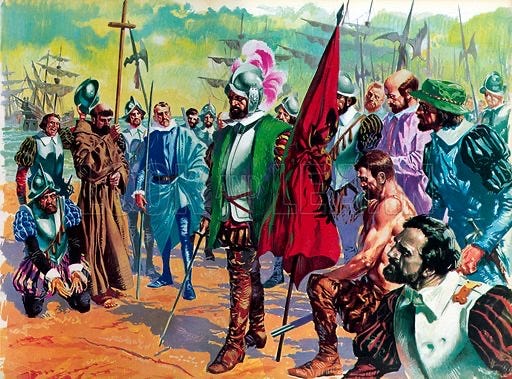
There is a poignant footnote: the last recorded military use of a trebuchet in Western warfare was by Hernán Cortés in Mexico in 1521, during the siege of Tenochtitlán — not because he lacked cannons, but because he’d run out of gunpowder. He had his men hastily construct one from local timber. It misfired on its first shot and destroyed itself.
Gravity yielded to chemistry.
The age of the trebuchet was over.
Except to hurl pumpkins!
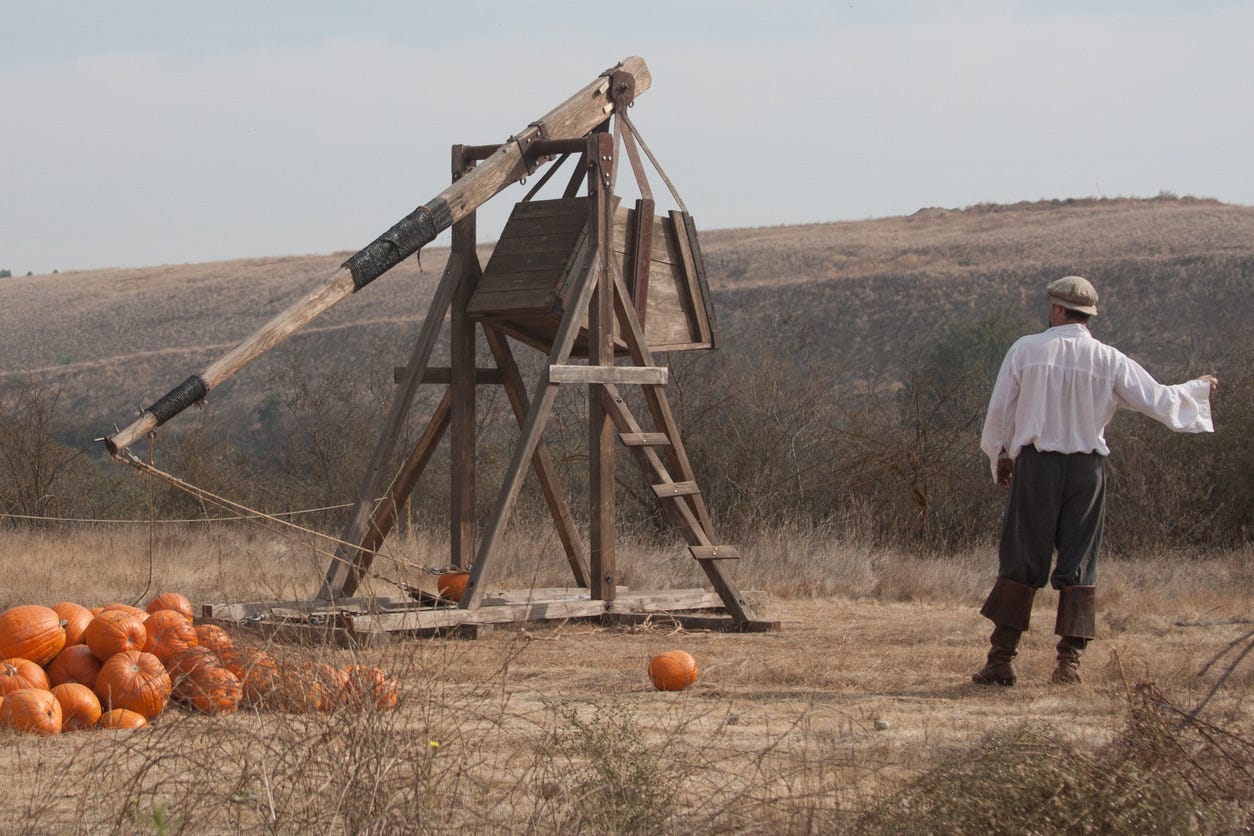
Unlike simpler catapults that relied on torsion or tension, the trebuchet’s gravity-driven mechanism allowed it to launch stones, incendiaries, or even diseased corpses with remarkable accuracy and force, making it one of the most effective weapons in siege warfare from the 12th to 15th centuries.